


Products Description
In the field of mineral processing wastewater treatment, the technical advantages of polyacrylamide (PAM) are becoming increasingly prominent. As a high-molecular-weight flocculant, its unique molecular chain structure enables rapid coagulation of suspended particles in wastewater through adsorption, bridging, and charge neutralization, significantly improving solid-liquid separation efficiency.
In actual operation, the selection and dosing process of PAM directly impact treatment effectiveness.
For mineral processing wastewater containing heavy metal ions, anionic PAM can form stable complexes with the metal ions through its carboxyl functional groups.
For highly turbid wastewater, the long-chain structure of non-ionic PAM is more effective in capturing fine particles.
Experimental results at a large copper mine have demonstrated that by optimizing the molecular weight (8-12 million) and solubility concentration (0.1% to 0.3%) of PAM, the sedimentation rate can be increased by more than three times, and the sludge moisture content can be reduced to below 75%.
Products Specifications
| SF APAM | N7058 | A7180 | A7185 | A7285 | A7286 | A7608 | A7808 | A7908 |
| CAS No. | 9003-05-8 | |||||||
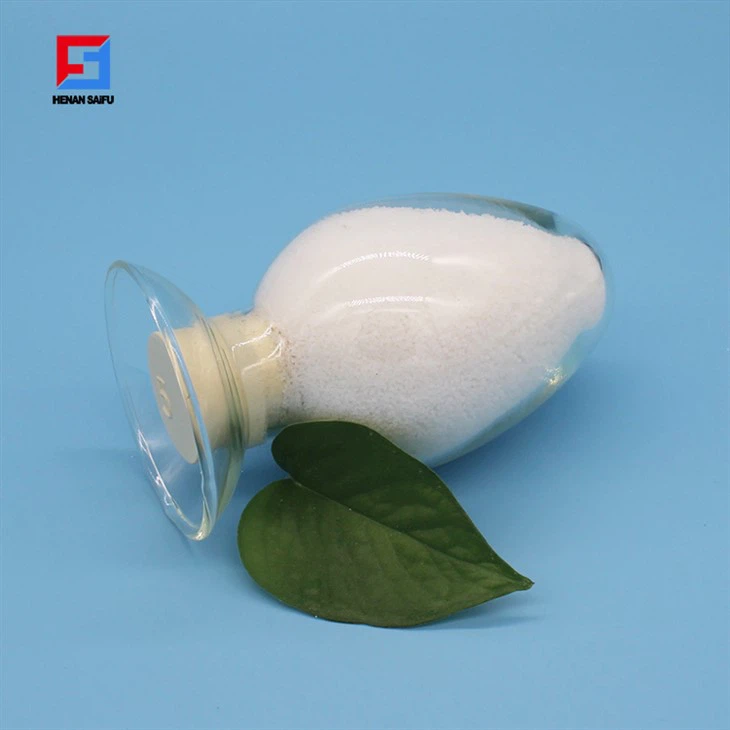
| Appearance | White granule powder | |||||||
| Charge density | Very low | Low | Med low | Med | Med | Med | Med high |
Med high |
| Molecular weight (million) | 10-12 | 14-16 | 14-16 | 17-18 | 16-17 | 18-20 | 16-18 | 12-14 |
Products Function
During the treatment of mineral processing wastewater, a large number of suspended particles in the wastewater carry a negative charge, maintaining a certain stability and making them difficult to settle naturally. Polyacrylamide uses the positive charges in its long-chain molecules to bind to suspended particles in the wastewater, causing them to attract and aggregate to form flocs. As the flocs grow, they eventually precipitate in the water, facilitating subsequent solid-liquid separation.
In addition, polyacrylamide can connect dispersed particles through a "bridging" effect. This adsorption-bridging process is the primary manifestation of its flocculation effect. Adding polyacrylamide to wastewater treatment systems can significantly increase the settling rate of solids, thereby purifying wastewater and recovering clean water.
Polyacrylamide Usage and Precautions
Polyacrylamide has a high flocculation efficiency in mineral processing wastewater treatment, but achieving optimal results requires mastering the appropriate dosage and operation method.
Dosage Control: The effectiveness of polyacrylamide is closely related to its dosage. Insufficient dosage will result in incomplete flocculation of wastewater particles and poor settling. Excessive dosage will lead to excessive flocculation, forming excessive flocs, and affecting settling rate. Therefore, it is recommended to determine the optimal dosage through experimentation and adjust it appropriately based on the properties of the wastewater.
Dissolution Process: Polyacrylamide must be dissolved in water before use to a solution of a certain concentration. Stirring is required during the dissolution process, and the stirring speed should be moderate to avoid disrupting the molecular chain structure and affecting the flocculation effect. Generally, the solution concentration should be controlled between 0.1% and 0.5%, and adjusted appropriately according to the treatment requirements.
Wastewater pH Control: Wastewater pH significantly affects the flocculation effect of polyacrylamide. Generally speaking, anionic polyacrylamide (PAA) performs better in alkaline environments, while cationic polyacrylamide (PAA) exhibits better flocculation performance in neutral or slightly acidic environments. Therefore, when treating mineral processing wastewater, the appropriate PAA type should be selected based on the wastewater pH and the pH should be adjusted appropriately.
Wastewater temperature: Temperature also has a certain impact on the flocculation performance of PAA. Generally, higher wastewater temperatures accelerate molecular motion, resulting in better flocculation. However, excessively high temperatures can cause PAA molecular chains to break, affecting its functionality. Therefore, it is recommended to control the wastewater temperature during treatment to avoid excessively high or low temperatures.
Advantages of Polyacrylamide
Polyacrylamide offers significant advantages over other flocculants in mineral processing wastewater treatment.
1. PAM possesses strong flocculation capacity, effectively removing suspended particles from wastewater even at relatively low concentrations.
2. The low dosage of polyacrylamide not only reduces chemical costs but also avoids secondary pollution caused by overdosage.
3. Polyacrylamide is highly biodegradable and does not cause long-term environmental pollution, making it a green and environmentally friendly flocculant.
Ordering & Packaging
Available in various molecular weights and charge densities to match your specific water or sludge characteristics. (Specify available options if possible, e.g., Medium/High Molecular Weight, Medium/High Cationicity).
Standard Packaging: 25kg multi-layer kraft paper bags with inner plastic lining. Bulk packaging options (e.g., 500kg, 1000kg) available upon request.
Delivery Time
Orders of 20 tons will ship within 3 days;
Orders of 50 tons will ship within 5 days;
Orders of 100 tons will ship within 7 days.
Hot Tags: mining wastewater treatment polymer chemicals anionic flocculant polyacrylamide pam, China mining wastewater treatment polymer chemicals anionic flocculant polyacrylamide pam manufacturers, suppliers, polyacrylamide for sale, polyacrylamide price, pam flocculant, polyacrylamide flocculant water treatment, cationic polyacrylamide price, pam water treatment


