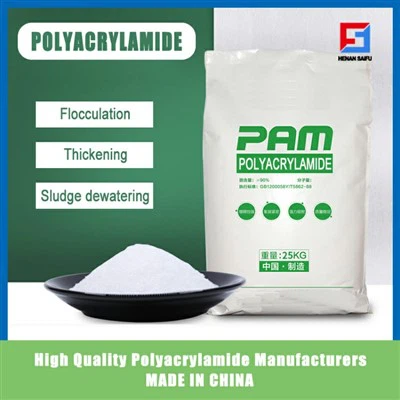
Cationic polymers are polymers that bear positively charged groups. These groups are attached to the polymer backbone or located on the side chains. Cationic polymers are commonly used to remove suspended solids (i.e., turbidity) from solutions. The positive ions within the cationic polymers attract negatively charged suspended particles and aggregate them through flocculation. The collected solids settle at the bottom of the treatment tank. Cationic polymers are often referred to as flocculants and are also known as coagulants or thickening agents.
Various types of cationic polymers are available for wastewater treatment. Their effectiveness depends on several factors, including the molecular weight and pH of the wastewater being treated. Cationic polymers are also sensitive to temperature and pH, meaning they must be used under controlled conditions.

Cationic polymers are frequently used in industrial water treatment to reduce liquid turbidity by removing suspended solids. They are also employed to remove impurities and contaminants, such as heavy metals, from water. Cationic polymers are often used in conjunction with other treatment methods, such as ultraviolet (UV) disinfectors or oxidizing agents.
The synthesis of cationic polymers is typically based on living cationic polymerization. This enables the synthesis of functional polymers with well-defined characteristics, such as block copolymers, microspheres, capsules, and stimuli-responsive polymers.
Polymers can be prepared via cationic polymerization, in which monomers are activated by organometallic catalysts or strong Lewis acids. Using a strong Lewis acid as a co-initiator can reduce the need for volatile solvents and increase the reaction rate. Additionally, Lewis acid co-initiators can activate alkyl halides, allowing them to act as nucleophiles during the polymerization process.
In cationic polymerization, the vinyl monomers used must be capable of stabilizing the resulting cation. Monomers bearing electron-donating substituents or conjugated double bonds are generally best suited for this purpose; examples include isobutylene, styrene, and propylene. Cation stability also depends on the degree of substitution and conjugation. For instance, the styrene cation is less stable than the isobutylene or propylene cations due to its longer bond length.
Another distinction between cationic and anionic polymerization lies in the sensitivity of the cation to termination reactions. These termination reactions can occur either intramolecularly or intermolecularly, depending on the environment. The most common termination reactions involve the abstraction of a hydride ion (H⁻), which can occur through reaction with a counterion or via regeneration at the polymer chain end. This process is analogous to chain transfer in free-radical polymerization.