

Polyacrylamide (PAM) is a versatile polymer with a wide range of applications across various industries. While its use in water treatment, mining, and oil and gas sectors is well - known, its role in the food industry is also significant, albeit more nuanced. As a PAM polyacrylamide supplier, I am excited to delve into the details of how PAM contributes to the food industry.
1. Clarification and Filtration in Beverage Production
One of the primary applications of PAM in the food industry is in the clarification and filtration processes of beverages. In the production of fruit juices, for example, PAM acts as a flocculant. When added to the juice, it helps to aggregate small suspended particles such as pulp, pectin, and other colloidal materials. These aggregated particles then settle more easily, allowing for more efficient removal through filtration.
The process is based on the principle of charge neutralization and bridging. PAM molecules have long chains with charged groups. These charged chains can interact with the oppositely - charged particles in the juice. By neutralizing the surface charges of the particles, PAM reduces the electrostatic repulsion between them. At the same time, the long chains of PAM can bridge multiple particles together, forming larger flocs.
This application is crucial for producing clear and visually appealing juices. Consumers generally prefer juices that are free from cloudiness and sediment. Using PAM in the clarification process helps beverage manufacturers meet these consumer expectations. Moreover, it can also improve the efficiency of the filtration equipment, reducing the frequency of filter clogging and maintenance. You can find high - quality PAM products suitable for such applications at Factory High Quality Water Treatment Chemicals Flocculants CAS 9003 - 05 - 8 Polyacrylamide PAM.
2. Stabilization of Emulsions in Food Products
Many food products, such as salad dressings, mayonnaise, and dairy - based beverages, are emulsions. An emulsion is a mixture of two immiscible liquids, typically oil and water. PAM can play a role in stabilizing these emulsions.
PAM can adsorb at the oil - water interface, forming a protective layer around the oil droplets. This layer helps to prevent the coalescence of the oil droplets, which would otherwise lead to phase separation in the emulsion. The long - chain structure of PAM provides steric hindrance, keeping the oil droplets apart. Additionally, the charged groups on the PAM molecules can create an electrostatic repulsion between the droplets, further enhancing the stability of the emulsion.
In the production of mayonnaise, for instance, PAM can help maintain a smooth and homogeneous texture over a longer period. This is important for both the quality and shelf - life of the product. Consumers expect mayonnaise to have a consistent texture from the time they open the jar until it is finished. By using PAM as an emulsion stabilizer, food manufacturers can meet these quality standards.
3. Sludge Dewatering in Food Processing Wastewater Treatment
Food processing generates a significant amount of wastewater, which often contains organic matter, suspended solids, and fats. Treating this wastewater is essential to meet environmental regulations and reduce the environmental impact of food production.

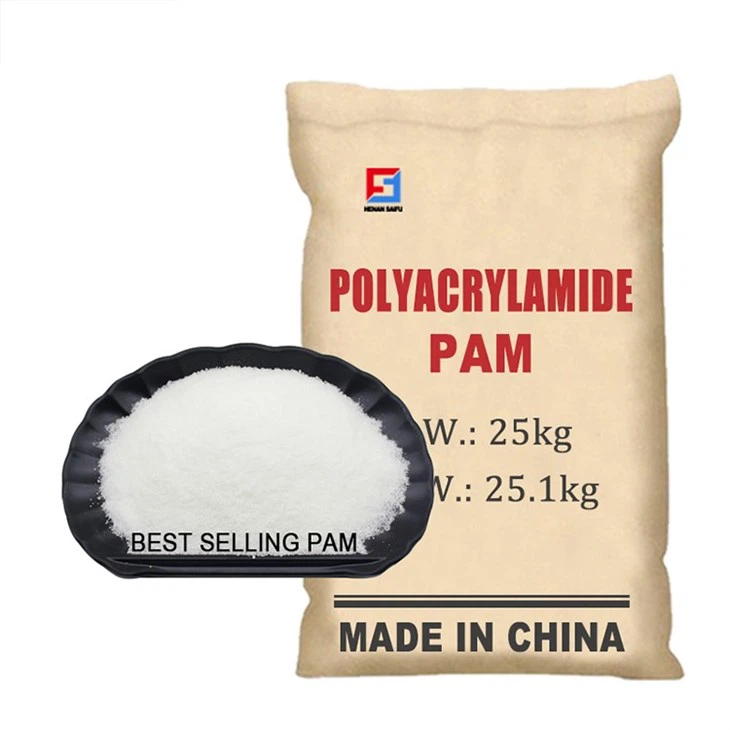
PAM is widely used in the sludge dewatering process of food processing wastewater treatment. When added to the sludge, PAM helps to bind the solid particles together, forming larger and more compact flocs. These flocs are easier to separate from the water phase. After the flocculation process, the sludge can be further dewatered using mechanical methods such as centrifugation or belt - press filtration.
The use of PAM in sludge dewatering can significantly reduce the volume of the sludge, making it easier and more cost - effective to dispose of. It also helps to recover more water from the sludge, which can be reused in the food processing plant or discharged safely into the environment. For sludge dewatering applications, our Sludge Dewatering Wastewater Treatment Cationic Polyacrylamide Powder Flocculant is an excellent choice.
4. Role in Starch Production
In starch production, PAM can be used in the separation and purification of starch from other components in the raw materials, such as potatoes or corn. During the starch extraction process, the raw material is crushed and mixed with water to form a slurry. This slurry contains starch granules as well as other impurities.
PAM can be added to the slurry to flocculate the starch granules and separate them from the other components. The flocculated starch can then be more easily separated by sedimentation or filtration. This helps to improve the purity and quality of the starch product. High - quality starch is in demand in the food industry for various applications, such as thickening agents in sauces and soups.
5. Quality and Safety Considerations
When using PAM in the food industry, strict quality and safety standards must be followed. The PAM used in food applications should be of food - grade quality. It should be free from harmful impurities and meet the relevant regulatory requirements.
In many countries, there are regulations regarding the maximum allowable concentration of PAM in food products. These regulations are in place to ensure the safety of consumers. As a PAM supplier, we are committed to providing products that meet these high - quality and safety standards. Our products are carefully tested and certified to ensure their suitability for food applications.
6. Mining - Related PAM Applications Indirectly Affecting the Food Industry
Although not a direct application in the food industry, PAM's use in mining can have an indirect impact. PAM is widely used in the mining industry as a flocculant for water treatment and tailings management.
Mining operations often generate large amounts of wastewater and tailings. By using PAM to treat these waste materials, mining companies can reduce the environmental impact of their operations. This is important because a clean and healthy environment is crucial for the production of food. For example, if mining wastewater is not properly treated and contaminates water sources used for agriculture, it can have a negative impact on crop production and food safety.
Our Best Mining Flocculant Water Treatment Polymer Nonionic Polyacrylamide NPAM Absorbent Polymer is designed to meet the high - performance requirements of the mining industry, contributing to a more sustainable environment for food production.
Conclusion
In conclusion, PAM plays a diverse and important role in the food industry. From clarifying beverages and stabilizing emulsions to treating wastewater and purifying starch, PAM contributes to the quality, efficiency, and sustainability of food production.
As a PAM polyacrylamide supplier, we understand the unique requirements of the food industry and are dedicated to providing high - quality products that meet the strictest safety and quality standards. If you are in the food industry and are looking for reliable PAM solutions, we invite you to contact us for procurement and further discussions. We are ready to work with you to find the best PAM products for your specific applications.
References
- Gregory, J. (1993). Coagulation and flocculation: theory and practice. Water Science and Technology, 27(8), 33 - 52.
- Somasundaran, P., & Kunjappu, J. T. (2006). Handbook of surface and colloid chemistry. CRC press.
- Lozinsky, V. I., & Plieva, F. M. (2006). Polymeric materials in food science and technology. In Comprehensive Polymer Science and Supplements (Vol. 3, pp. 337 - 363). Pergamon.


