


Hey there! As a supplier of anionic flocculants, I've been in the thick of the industry for quite a while. And let me tell you, understanding the quality standards for anionic flocculants is super important. It's not just about making a product; it's about making a product that really works and meets the needs of our customers.
First off, what the heck are anionic flocculants? Well, they're these cool polymers that have a negative charge. They're used in a bunch of different industries, like water treatment, mining, and papermaking. In water treatment, for example, they help to clump together tiny particles in the water so they can be easily removed. It's like a magic wand for making water clean!
Now, let's dive into the quality standards. One of the most important things is the molecular weight. The molecular weight of an anionic flocculant can have a huge impact on its performance. A higher molecular weight usually means better flocculation ability. That's because the longer polymer chains can more effectively bridge between particles and form larger flocs. But it's not as simple as just going for the highest molecular weight possible. If the molecular weight is too high, the flocculant might be too viscous and hard to dissolve, which can cause problems in the application process.
Another key factor is the degree of hydrolysis. This refers to the percentage of acrylamide units in the polymer that have been converted to acrylate units. The degree of hydrolysis affects the charge density of the flocculant. A higher degree of hydrolysis means a higher negative charge density, which can be better for flocculating positively charged particles. But again, it's all about finding the right balance. Too high a charge density can lead to over - flocculation, where the flocs break apart and don't settle properly.
The purity of the anionic flocculant is also crucial. Impurities can come from a variety of sources, like the raw materials used in the production process or the manufacturing environment. These impurities can interfere with the flocculation process and reduce the effectiveness of the flocculant. For example, metal ions in the flocculant can react with the particles in the water and form unwanted precipitates. That's why we always strive to produce high - purity anionic flocculants. You can check out our High Purity Water Treatment Polymer Flocculant Cationic Anionic Nonionic Polyacrylamide to see what I'm talking about.
Solubility is yet another important quality standard. An anionic flocculant needs to dissolve quickly and completely in water to be effective. If it doesn't dissolve properly, it won't be able to interact with the particles in the water and form flocs. There are a few things that can affect solubility, like the molecular weight, the degree of hydrolysis, and the presence of impurities. We've spent a lot of time and effort optimizing our production process to ensure that our anionic flocculants have excellent solubility.
In addition to these chemical properties, the physical properties of anionic flocculants also matter. The particle size and shape can affect how the flocculant disperses in water and how it interacts with particles. A uniform particle size distribution is usually preferred because it allows for more consistent performance.
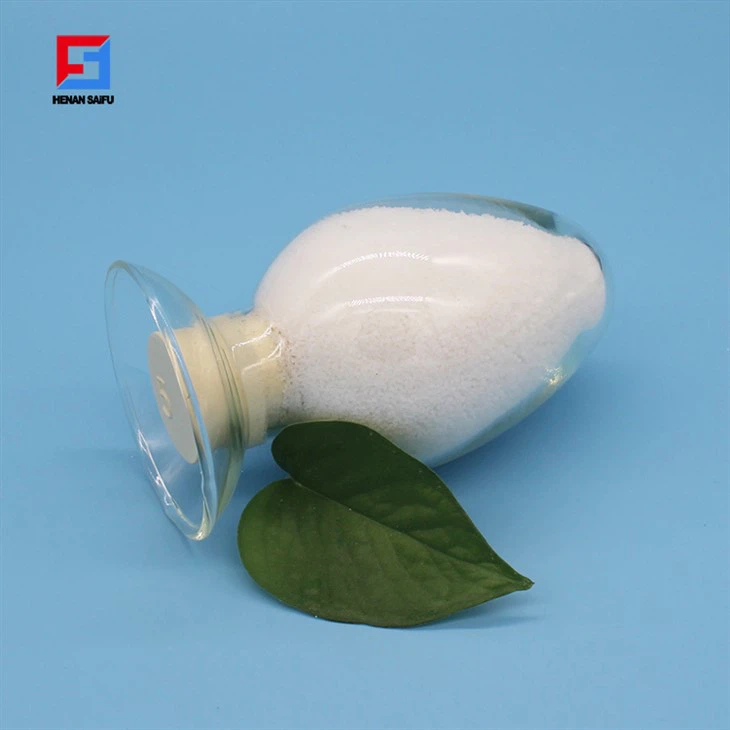

Let's talk about some specific applications and how the quality standards play out. In mining wastewater treatment, for example, the anionic flocculant needs to be able to quickly and effectively separate the solids from the water. The high - molecular - weight anionic flocculants are often used in this application because they can form large, dense flocs that settle rapidly. Our Mining Wastewater Treatment Polymer Chemicals Anionic Flocculant Polyacrylamide PAM is specifically designed to meet the demanding requirements of the mining industry.
In water treatment plants, the anionic flocculant is used to remove suspended solids, turbidity, and some organic matter from the water. The quality standards here are focused on achieving high - quality water purification with minimal residual flocculant in the treated water. That's why we pay so much attention to the purity and the effectiveness of our flocculants. You can find our Good Water Treatment Chemical Flocculant PAM Polyacrylamide CAS 9003 - 05 - 8 for Sale, which is a great option for water treatment applications.
As a supplier, we're constantly working to improve the quality of our anionic flocculants. We invest in research and development to come up with better formulations and production processes. We also conduct rigorous quality control tests at every stage of the production process to ensure that our products meet or exceed the industry standards.
If you're in the market for anionic flocculants, you need to make sure you're getting a high - quality product. Don't just go for the cheapest option, because you might end up with something that doesn't work well and costs you more in the long run. Look for a supplier who understands the quality standards and is committed to producing top - notch products.
We're here to help you find the right anionic flocculant for your specific needs. Whether you're in the water treatment, mining, or any other industry that uses anionic flocculants, we've got the expertise and the products to meet your requirements. If you have any questions or want to discuss your needs in more detail, feel free to reach out to us. We're always happy to have a chat and see how we can help you with your flocculation needs.
References
- "Flocculation in Water Treatment" by Water Research Foundation
- "Polyacrylamide and Its Copolymers in Water Treatment" by Journal of Applied Polymer Science


