


Hey there! As a polyacrylamide supplier, I often get asked about how this amazing substance is synthesized. So, I thought I'd take a moment to break it down for you in a way that's easy to understand.
The Basics of Polyacrylamide
Polyacrylamide, often referred to as PAM, is a water - soluble polymer that finds a wide range of applications, especially in water treatment and sludge dewatering. It comes in different forms like non - ionic, cationic, and anionic, each with its own unique properties and uses.
Starting Materials
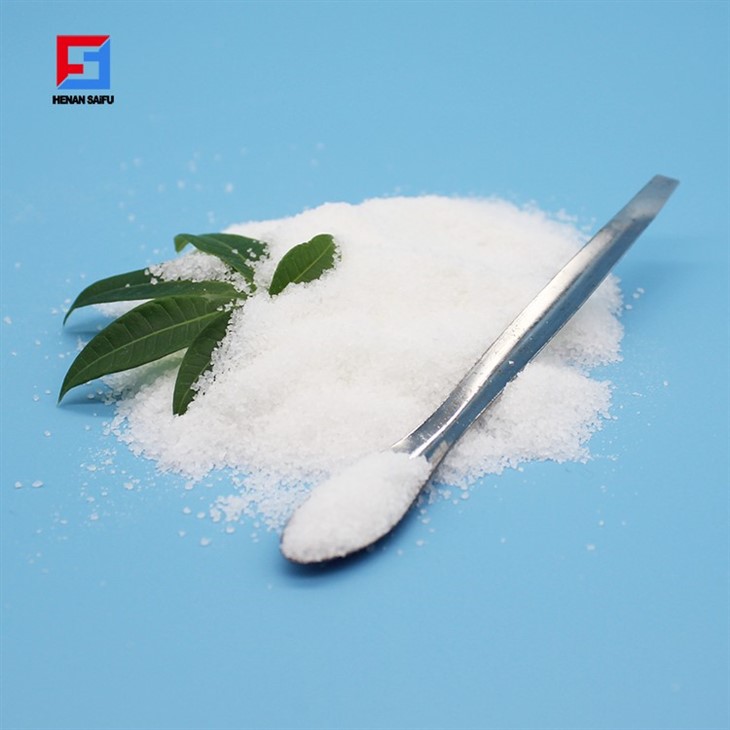
The synthesis of polyacrylamide begins with the raw material acrylamide. Acrylamide is a small, reactive molecule with the chemical formula C₃H₅NO. It's a white, odorless, and crystalline solid. This compound is the building block for polyacrylamide. You can check out more about the raw materials for polyacrylamide at Polymer Powder Flocculant Polyacrylamide Raw Materials Production for Water Treatment Chemicals.
Polymerization Process
The main method to turn acrylamide into polyacrylamide is through a process called polymerization. There are a few different ways to carry out this polymerization, but the most common ones are free - radical polymerization and redox polymerization.
Free - Radical Polymerization
In free - radical polymerization, we start by generating free radicals. Free radicals are highly reactive molecules with an unpaired electron. Usually, we use initiators to create these free radicals. Common initiators include potassium persulfate or azobisisobutyronitrile (AIBN).
When the initiator breaks down, it releases free radicals. These free radicals then react with the acrylamide monomers. The reaction causes the acrylamide molecules to link together, forming long chains. As more and more acrylamide monomers are added to the chain, the polymer grows.
The reaction usually takes place in an aqueous solution. We control the temperature, pressure, and the concentration of the initiator and the acrylamide to get the desired properties of the polyacrylamide. For example, if we want a high - molecular - weight polyacrylamide, we might use a lower concentration of the initiator and carry out the reaction at a lower temperature.

Redox Polymerization
Redox polymerization is another popular method. In this process, we use a redox pair as the initiator system. A redox pair consists of an oxidizing agent and a reducing agent. For example, we can use ammonium persulfate as the oxidizing agent and sodium bisulfite as the reducing agent.
When the oxidizing and reducing agents react, they generate free radicals. These free radicals then initiate the polymerization of acrylamide, just like in free - radical polymerization. Redox polymerization is often preferred because it can be carried out at lower temperatures and is faster compared to some other methods.
Modifying Polyacrylamide
After the basic polymerization, we can modify the polyacrylamide to get different types, such as non - ionic, cationic, and anionic polyacrylamide.
Non - ionic Polyacrylamide
Non - ionic polyacrylamide is the simplest form. It's made directly from the polymerization of acrylamide without any further modification. Non - ionic PAM is used in many applications, especially when we need to flocculate particles in a non - charged or slightly charged environment. You can learn more about non - ionic polyacrylamide at Water Treatment Chemical Flocculant Nonionic Cationic Anionic Polyacrylamide PAM.
Cationic Polyacrylamide
To make cationic polyacrylamide, we introduce cationic groups to the polyacrylamide chains. This is usually done by copolymerizing acrylamide with cationic monomers like dimethyl diallyl ammonium chloride (DMDAAC). The cationic groups give the polyacrylamide a positive charge. Cationic PAM is great for sludge dewatering because it can bind to negatively charged particles in the sludge. Check out Sludge Dewatering Wastewater Treatment Cationic Polyacrylamide Powder Flocculant for more details on its use in sludge dewatering.
Anionic Polyacrylamide
Anionic polyacrylamide is created by introducing anionic groups to the polyacrylamide chains. We can do this by hydrolyzing the amide groups in the polyacrylamide to carboxylate groups. The anionic groups give the polyacrylamide a negative charge. Anionic PAM is often used in water treatment to remove positively charged particles.
Post - treatment
Once the polymerization and modification are done, we need to go through some post - treatment steps. First, we need to remove any unreacted monomers. Unreacted acrylamide is toxic, so it's crucial to get rid of it. We can do this through methods like precipitation or extraction.
Then, we dry the polyacrylamide to get it in a solid form. Usually, we use spray - drying or drum - drying methods. The dried polyacrylamide is then milled into a fine powder, which is easy to handle and transport.
Quality Control
Throughout the synthesis process, we need to carry out strict quality control. We test the polyacrylamide for its molecular weight, charge density, solubility, and other properties. These properties determine the performance of the polyacrylamide in different applications. For example, in water treatment, a high - molecular - weight polyacrylamide might be more effective at flocculating large particles, while a low - molecular - weight one might work better for smaller particles.
Conclusion
So, that's the overall process of synthesizing polyacrylamide. It's a complex but fascinating process that involves a lot of chemistry and engineering. Whether you're in the water treatment industry, the mining industry, or any other field that uses polyacrylamide, understanding how it's made can help you choose the right product for your needs.
If you're interested in purchasing polyacrylamide for your business, we're here to help. We have a wide range of polyacrylamide products, including non - ionic, cationic, and anionic types, to meet your specific requirements. Just get in touch with us to start a procurement negotiation, and we'll work together to find the best solution for you.
References
- Odian, G. (2004). Principles of Polymerization. John Wiley & Sons.
- Hunkeler, D., & Tauer, K. (2007). Handbook of Radical Polymerization. Wiley - Interscience.


