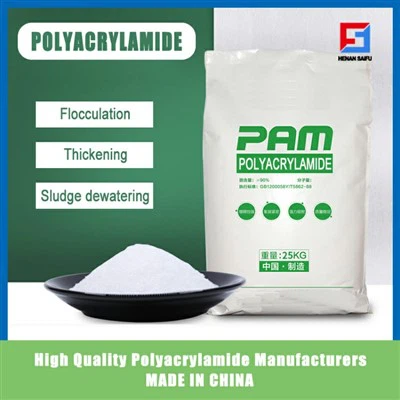
Selection of Wastewater Treatment Agents for Mineral Processing
Anionic or non-ionic polyacrylamide products are typically used for the sedimentation of mineral processing wastewater.
The specific product grade and dosage should be determined through testing, based on the selected water treatment process and the characteristics of the mineral wash water.
Proper use of polyacrylamide in mineral processing wastewater not only enhances flocculation and effectively treats mineral washing sludge, but also plays a crucial role in maintaining product quality standards, improving operational efficiency, and reducing costs.

Precautions for Use
1. Effective dispersion of the product in water is critical during use; otherwise, clumping and the formation of "fish-eyes" may occur, extending the dissolution time.
2. While warm water accelerates dissolution, excessive temperatures can cause thermal degradation of the polymer chains, thereby affecting viscosity. Generally, the water temperature should not exceed 50°C.
3. Agitation aids dissolution, but excessive agitation can break and degrade the long polymer chains. A marine-style propeller agitator is recommended.
4. Aqueous solutions should not be stored for more than 48 hours, as this can lead to a drop in viscosity and impair performance.
Storage Instructions
1. Polyacrylamide should be stored in a cool, dry, and well-ventilated environment.
2. Do not stack polyacrylamide directly on the ground; it is best stored on pallets to prevent moisture absorption and clumping.
3. Stacking height should be limited; generally, stacks should not exceed ten layers.
4. Unused polyacrylamide must be kept in sealed packaging and not exposed to air, as this makes it prone to clumping.
5. Follow the "first-in, first-out" principle for polyacrylamide inventory.