What is Polyvinylamine?
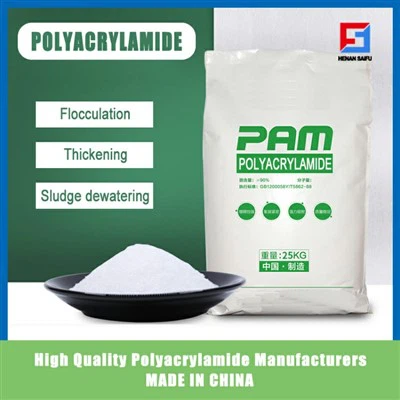
Polyacrylamide (abbreviated as PAM) is classified into cationic, anionic, and non-ionic types, with a molecular weight ranging from 4 million to 20 million. This product is a white powder that is readily soluble in water; however, it decomposes easily when temperatures exceed 120°C. Polyacrylamide is a synthetic polymeric flocculant-commonly known as "Separan"-and belongs to the class of polyelectrolytes. It is widely utilized in the solid-liquid separation processes of leaching slurries at uranium mills (such as in counter-current decantation washing processes) to enhance the clarification, sedimentation, and filtration properties of the slurry.
Properties: A colorless or yellowish viscous colloid. It is a water-soluble resin that can be dissolved in water in any proportion. In a limited number of solvents-such as glacial acetic acid, acrylic acid, ethylene glycol, formamide, glycerol, and lactic acid-its solubility is only approximately 1%. It is almost completely insoluble in organic solvents. It decomposes easily when temperatures exceed 120°C.
Acrylamide is synthesized from acrylonitrile in the presence of a copper catalyst. The acrylamide then undergoes polymerization in the presence of K₂S₂O₈ (potassium persulfate) to form polyacrylamide. Following alkaline treatment and water washing, a copper-aluminum alloy is prepared as a catalyst and loaded into a hydration reactor. The acrylonitrile feedstock is pumped into a storage tank and subsequently fed into a metering tank. Purified water-which has undergone ion-exchange treatment-is introduced into the metering tank and then continuously pumped into the hydration reactor in a proportional ratio via a feedstock preheater.
The hydration reaction proceeds at a temperature of 85–125°C, yielding an aqueous solution of acrylamide. Any residual acrylonitrile is routed from a flash evaporator column back to a condenser, and then flows into a water metering tank for recycling. The acrylamide solution flows from the flash evaporator into a storage tank; it is then pumped into an overhead tank, passed through a resin exchange column, and finally directed into a storage tank to prepare a monomer solution with a concentration of 7–8%. This solution is then fed into a polymerization kettle to produce a colloidal polyacrylamide product, resulting in the final finished material.
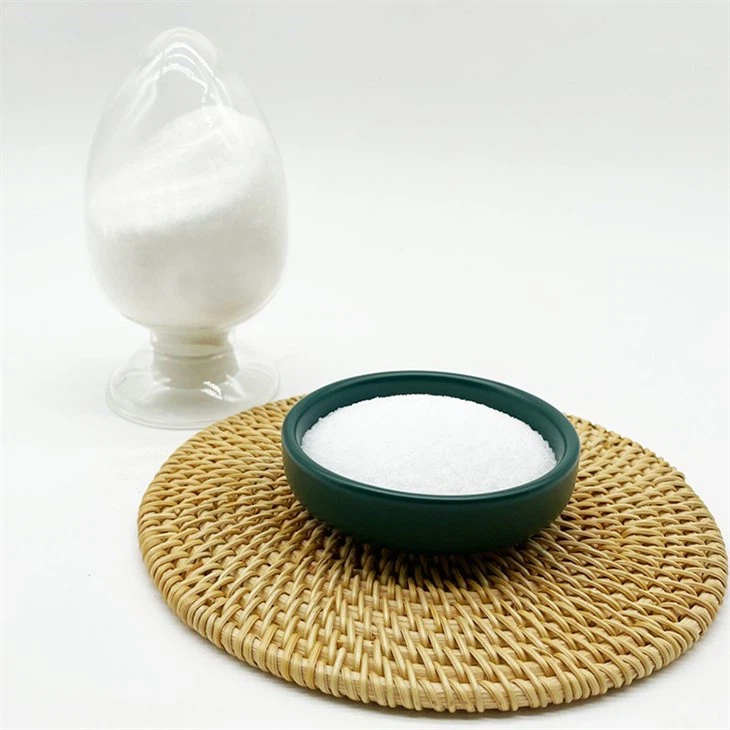
Polyacrylamide is primarily available in two forms: powder and colloid. Since the colloidal form is difficult to transport and handle, powdered polyacrylamide (PAM) has gained significant favor among users in recent years. Polymer dispersions-specifically PAM emulsions-have also attracted considerable attention due to their excellent water solubility. Polyacrylamide Specifications: Relative molecular weight is one of the primary performance indicators used to differentiate between various types of polyacrylamide. High-molecular-weight PAM is primarily utilized as a flocculant; medium-molecular-weight PAM serves mainly as a dry-strength agent in papermaking; and low-molecular-weight PAM functions as a dispersant.
How to Select a Cationic Flocculant?
Why is the selection of the specific ionic type absolutely critical when using cationic polyacrylamide to treat wastewater? Because numerous industrial enterprises generate industrial sludge and wastewater, and different types of wastewater require the selection of specific types of cationic polyacrylamide. Therefore, what factors should be taken into account when selecting the appropriate cationic polyacrylamide?
First, it is essential to understand the source, properties, composition, and solids content of the sludge. Based on their primary constituents, sludge types can be broadly classified into organic sludge and inorganic sludge. Generally speaking, cationic polyacrylamide is employed for the treatment of organic sludge and for sludge dewatering, whereas anionic polyacrylamide is used for the treatment of inorganic sludge. Cationic polyacrylamide is not easily utilized in highly alkaline environments, while anionic polyacrylamide is unsuitable for use in highly acidic environments. Typically, the higher the solids content of the sludge, the greater the dosage of polyacrylamide required.
Selecting the Ionicity of Cationic Polyacrylamide: For sludge designated for dewatering, small-scale laboratory tests can be conducted to screen polyacrylamide flocculants with varying degrees of ionicity, thereby identifying the most suitable product. This approach not only ensures optimal flocculation results but also minimizes the required dosage of polyacrylamide, thereby reducing the overall cost of water treatment chemicals. The key criteria for selecting the appropriate ionicity are the resulting floc size and floc strength (specifically, the water content of the floc).
Floc Size: If the flocs are too small, their settling velocity will be compromised; conversely, if the flocs are too large, they will absorb excessive amounts of water, resulting in poor permeability within the sludge matrix. Floc size can be effectively controlled by adjusting the molecular weight of the polyacrylamide.
Floc Strength: Flocs must remain stable and resist breakdown under shear forces. Selecting polyacrylamide with an appropriate degree of ionicity helps to enhance floc strength.
Let us consider a few specific industries as examples:
Coal washing and sand washing processes are generally relatively simple, allowing for the direct use of cationic polyacrylamide.
Wastewater treatment in the chemical industry.
Wastewater generated by the bleaching, dyeing, and papermaking industries is particularly difficult to treat; consequently, the dosage of treatment agents should be increased and maintained at an appropriate level.
The pollutant concentrations in electroplating wastewater and general industrial wastewater typically do not exceed the treatment standards established for domestic sewage. Treatment methods for domestic sewage vary, as do the specific flocculants employed. If a biochemical treatment method is utilized, cationic polyacrylamide is required solely as a sludge dewatering agent.
If a physicochemical treatment method is adopted, polymeric aluminum chloride may be added first, followed by anionic polyacrylamide.
Cationic polyacrylamide is used for dewatering purposes; the specific dosage required for different types of wastewater should be determined based on the unique characteristics of the water quality.