
Polyacrylamide is an organic polymeric flocculant. Compared to other flocculant products, it facilitates the aggregation of colloidal particles-forming flocs-through mechanisms such as bridging, charge neutralization, and adsorption onto the surfaces of the colloidal particles, thereby enabling their separation from water.
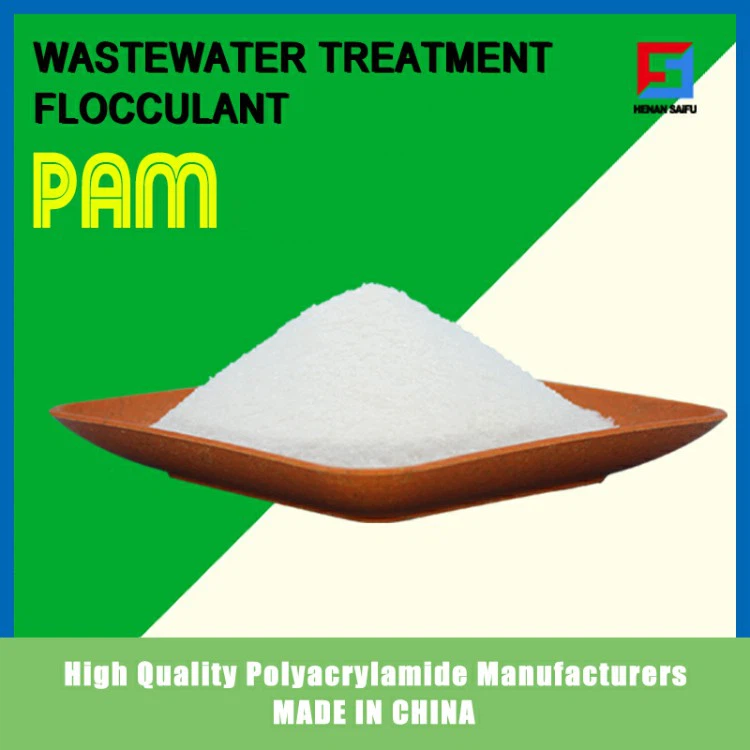
Polyacrylamide primarily functions through mechanisms such as electrostatic adsorption, charge neutralization (destabilization), electric double-layer compression, bridging, and network formation. These actions cause pollutant particles to aggregate into dense, large particles, which then settle under the influence of gravity, thereby achieving the flocculation and removal of pollutants from the water and fulfilling the objective of wastewater treatment. As a wastewater treatment chemical, it leverages the advantages of physical and chemical processes to remove BOD, COD, SS, nitrogen, phosphorus, and heavy metal ions. Furthermore, it enhances the activity of aerobic microorganisms, accelerates the oxidative decomposition of organic matter in the water, improves oxygen transfer efficiency, stimulates the rapid proliferation of aerobic microbial populations, significantly boosts oxygen utilization rates within the water, and improves sludge settling performance-thereby fundamentally enhancing the quality of the treated effluent.
Appearance: Powder or liquid form
Scope of Application:
Purification and treatment of municipal wastewater
Purification and treatment of various industrial wastewaters, including those from electroplating, papermaking, printing and dyeing, bleaching, leather tanning, and other industries
Dewatering and drying of various types of precipitated sludge
Characteristics:
As a water purification flocculant, polyacrylamide possesses functions such as oil-water separation, decolorization, and flocculation. It can be used in conjunction with conventional inorganic flocculants, organic flocculants, and coagulation aids.
Polyacrylamide appears as white powder granules with a molecular weight ranging from 6 million to 25 million. It exhibits excellent water solubility, dissolving in water in any proportion, yet remains insoluble in organic solvents. Its effective pH range is 7 to 14. In neutral to alkaline media, it acts as a polymeric electrolyte; it is sensitive to salt electrolytes and can cross-link with high-valence metal ions to form insoluble colloids. Anionic polyacrylamide is widely utilized as a wastewater flocculant in the mining, power plant, and coal washing industries.
Product Features of Polyacrylamide:
1) Flocculation: Through mechanisms such as charge neutralization, bridging adsorption, and flocculation, PAM facilitates the aggregation of suspended substances into flocs. 2) Bonding: Generates a bonding effect through mechanical, physical, and chemical interactions.
3) Drag Reduction: PAM effectively reduces the frictional drag of fluids; adding a trace amount of PAM to water can reduce drag by 50–80%.
4) Thickening Effect: PAM exhibits a thickening effect under neutral and acidic conditions, as well as at pH values greater than 10.
These wastewater treatment agents and water purification flocculants should be dissolved in water-at a specific ratio determined by the nature of the powder and the wastewater-before being introduced into air flotation, froth flotation, sedimentation, or other wastewater treatment equipment.
Since water quality conditions, process parameters, and the quantity of oily impurities vary widely, it is typically necessary to conduct small-scale tests to determine the exact required dosage.


