


Solubility is a critical property when it comes to flocculants, especially anionic polyacrylamide (APAM). As a prominent supplier of APAM flocculants, I've witnessed firsthand the importance of understanding the solubility of APAM in water. This knowledge not only affects the performance of the flocculant but also plays a significant role in various industrial applications.
Factors Affecting the Solubility of APAM in Water
Molecular Weight
The molecular weight of APAM has a profound impact on its solubility. Generally, APAM with a lower molecular weight tends to dissolve more readily in water. This is because lower - molecular - weight polymers have shorter chain lengths, which allows water molecules to penetrate and solvate the polymer chains more easily. On the other hand, high - molecular - weight APAM has longer and more entangled chains. These chains require more energy to separate and interact with water molecules, resulting in slower dissolution rates. For instance, in a laboratory setting, when comparing a low - molecular - weight APAM sample (around 5 million Daltons) and a high - molecular - weight one (over 15 million Daltons), the former would dissolve completely in water within a few minutes, while the latter might take several hours or even longer to achieve full dissolution.
Degree of Hydrolysis
The degree of hydrolysis of APAM also influences its solubility. APAM is a partially hydrolyzed polyacrylamide, and the degree of hydrolysis refers to the proportion of acrylamide units that have been converted to acrylate units. A higher degree of hydrolysis means more acrylate groups are present in the polymer chain. These acrylate groups are negatively charged and can interact with water molecules through electrostatic forces, enhancing the solubility of APAM. However, if the degree of hydrolysis is too high, the polymer may become overly hydrophilic and form a highly viscous solution or even gel, which can affect its performance as a flocculant. A moderate degree of hydrolysis, typically in the range of 20% - 30%, is often considered optimal for achieving good solubility and flocculation performance.
Temperature
Temperature is another crucial factor affecting the solubility of APAM in water. As the temperature increases, the kinetic energy of water molecules and polymer chains also increases. This increased energy allows water molecules to move more freely and interact more effectively with the APAM chains, promoting dissolution. In cold water (around 5°C - 10°C), the solubility of APAM is significantly reduced, and the dissolution process can be extremely slow. In contrast, at higher temperatures (around 40°C - 50°C), APAM can dissolve much faster. However, it's important to note that extremely high temperatures can cause the degradation of APAM, leading to a loss of its flocculation properties. Therefore, a temperature range of 20°C - 30°C is usually recommended for dissolving APAM to balance solubility and polymer stability.
pH of the Solution
The pH of the water in which APAM is dissolved can also impact its solubility. APAM is more soluble in slightly alkaline solutions. In an alkaline environment, the acrylate groups in APAM are more ionized, which enhances their interaction with water molecules. At a pH of around 7 - 9, APAM can dissolve relatively easily. In acidic solutions, the acrylate groups may become protonated, reducing their solubility. For example, when dissolving APAM in a solution with a pH of 3 - 4, the dissolution rate is much slower compared to a solution with a pH of 8.
Measuring the Solubility of APAM
To accurately measure the solubility of APAM in water, several methods can be employed. One common method is the visual observation method. A known amount of APAM is added to a specific volume of water in a beaker, and the mixture is stirred at a constant speed. The time it takes for the APAM to completely dissolve, as judged by the disappearance of visible particles, is recorded. Another more precise method is the turbidity measurement. A turbidimeter is used to measure the turbidity of the solution over time. As the APAM dissolves, the turbidity of the solution decreases. When the turbidity reaches a stable, low value, it indicates that the APAM has dissolved completely.
Applications and the Importance of Solubility
The solubility of APAM in water is of great significance in various industrial applications. In water treatment, APAM is widely used as a flocculant to remove suspended solids, colloids, and organic matter from wastewater. If APAM does not dissolve properly in water, it cannot effectively interact with the contaminants in the wastewater, resulting in poor flocculation performance. For example, in a sewage treatment plant, if the APAM used has low solubility, the flocs formed may be small and weak, making it difficult to separate them from the water. This can lead to higher levels of pollutants in the treated water and increased operating costs.
In the mining industry, APAM is used for tailings dewatering. Good solubility ensures that the APAM can quickly and evenly disperse in the tailings slurry, promoting the aggregation of fine particles and improving the dewatering efficiency. If the solubility is poor, the APAM may form clumps in the slurry, reducing its effectiveness and causing blockages in the pipelines and equipment.
Our APAM Products and Solubility
As a supplier of APAM flocculants, we take great care in ensuring the solubility of our products. Our R & D team conducts extensive research to optimize the molecular weight, degree of hydrolysis, and other properties of our APAM to achieve the best solubility in water. We also provide detailed instructions on how to dissolve our APAM products properly, including the recommended temperature, pH, and stirring speed.
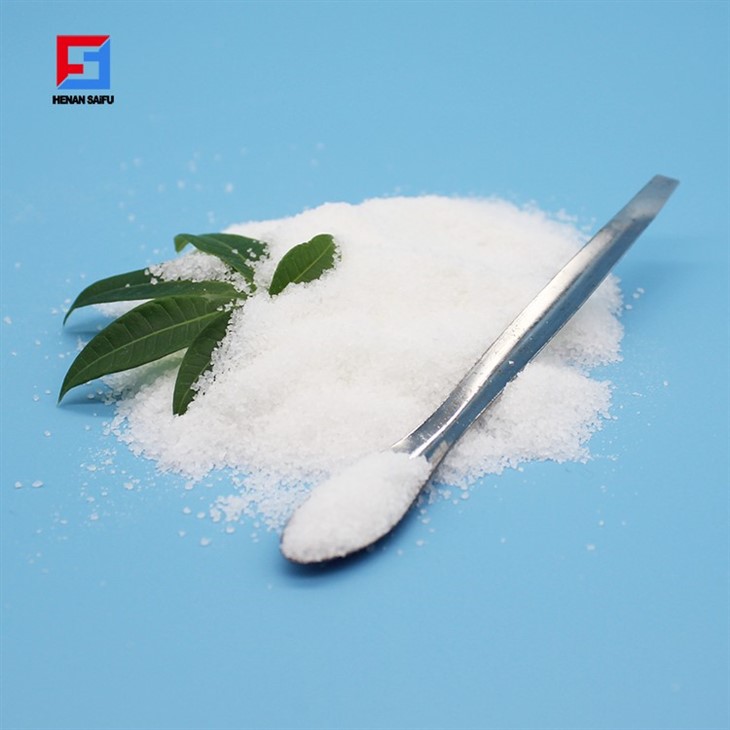
We offer a wide range of APAM products suitable for different applications. For example, our Cationic Polyacrylamide PAM Chemical Flocculant CPAM for Sugar Processing Wastewater CAS 9003 - 05 - 8 is specifically designed for the sugar industry, where it can effectively remove impurities from sugar - processing wastewater. Our Polymer Powder Flocculant Polyacrylamide Raw Materials Production for Water Treatment Chemicals is a high - quality raw material for water treatment chemicals, with excellent solubility and flocculation performance. And our Cationic Polyacrylamide CPAM Best Mining Flocculant Granules for Waste Water Treatment is ideal for the mining industry, helping to improve the efficiency of tailings dewatering.

Conclusion
Understanding the solubility of APAM in water is essential for its effective use in various industrial applications. Factors such as molecular weight, degree of hydrolysis, temperature, and pH all play important roles in determining the solubility of APAM. As a supplier, we are committed to providing high - quality APAM products with excellent solubility and performance. If you are in need of APAM flocculants for your specific application, we invite you to contact us for further discussion and procurement. We are confident that our products can meet your requirements and help you achieve better results in your operations.
References
- Gregory, J. (1998). Coagulation and flocculation: a review. Water Science and Technology, 37(1), 1-8.
- Zouboulis, A. I., & Avranas, S. (2000). Flocculation of kaolin suspensions by cationic polyacrylamides: effect of polymer molecular weight and charge density. Water Research, 34(7), 2001-2008.
- Xia, S., & Dai, X. (2015). Influence of temperature on the solubility and performance of polyacrylamide flocculants. Journal of Chemical Engineering of Chinese Universities, 29(3), 533-538.


